Crucial preparations for the Allied invasion of Normandy took place in the South Hams of Devon. The cliffs and beaches are similar to those near the River Vire in Normandy where the American forces were to land at a beach codenamed Utah.
Although preparations and exercises took place in late 1943 and spring 1944, the actual site of the invasion was a well-kept secret. The Germans were led to believe that the Straits of Dover or Norway were a more likely site for the attack.
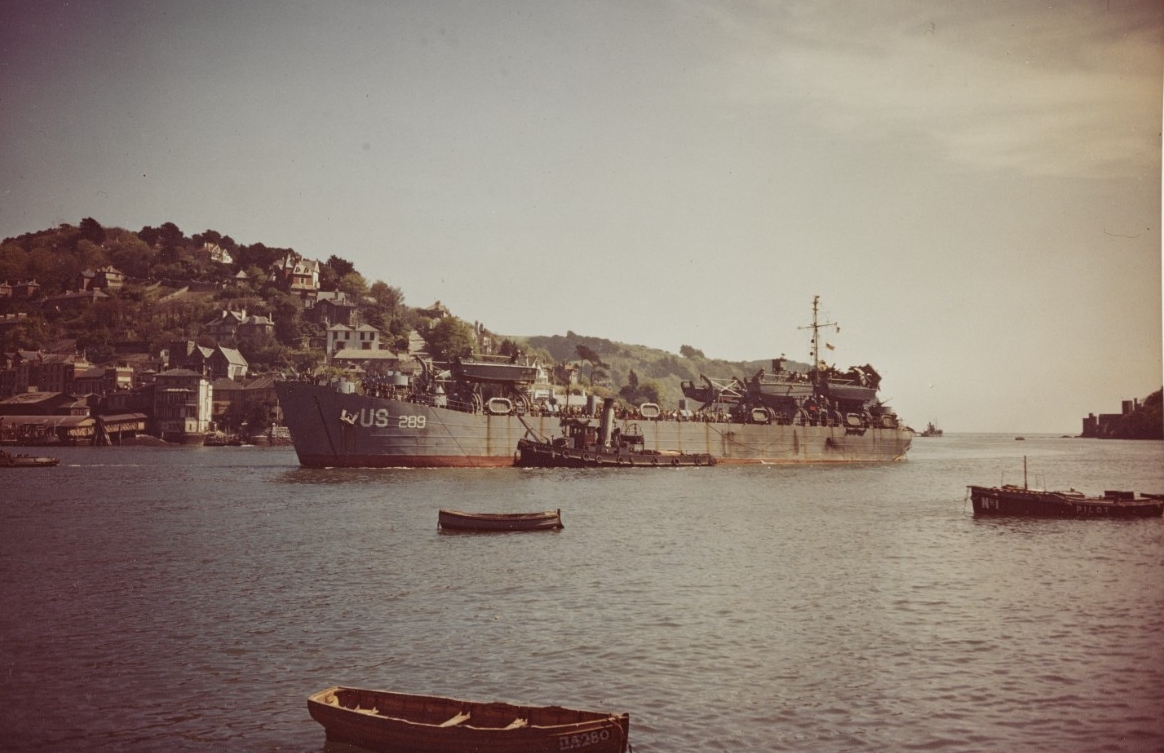 USS LST 289 arrives in Dartmouth Harbour after being torpedoed by German torpedo boats during an invasion rehearsal off Slapton Sands on 28 April 1944 - Naval History and Heritage Command
Devon County Council was instructed to evacuate 3,000 people and their livestock from 8 villages before Christmas 1943. Mrs Ivy Trowt, who ran the post office at Strete later remembered:
Landing exercises started in December 1943. The most complex exercise, codenamed Operation Tiger, at the end of April 1944, culminated in a beach invasion by 30,000 troops.
It was decided by General Eisenhower that the troops must experience real battle conditions so live ammunition was used. The first practice assault on 27th April in error resulted in some of the troops being bombarded by friendly fire from the shore.
The second disaster occurred on 28 April when 8 landing craft carrying vehicles and combat engineers were attacked by 9 German E-boats patrolling the Channel. Unfortunately, there was only one British ship leading the landing craft. The remaining ships and their escort fired back and the E-boats made no more attacks.
 Operation Tiger 1944 - Photograph of the Landing Ship Tank (LST) 289, damaged by a German torpedo during exercise “Operation Tiger”. Photo: US National Archives.
It is believed that 749 US servicemen lost their lives during Exercise Tiger, many drowning at sea while waiting to be rescued. Many had not been shown how to put on their lifebelts around their waists, because of the large backpacks they were carrying.
A local Normandy veteran, Mr Julian Perkin of Bishopsteignton, onboard HMS Obedient, remembered:
As a result of the disaster, all survivors were sworn to secrecy, for news of the disaster might have jeopardised the invasion plans. The second British escort ship had been late due to radio problems, and a signal from the E-boats had not been picked up by the landing craft. Thereafter radio frequencies between the Allies were standardised.
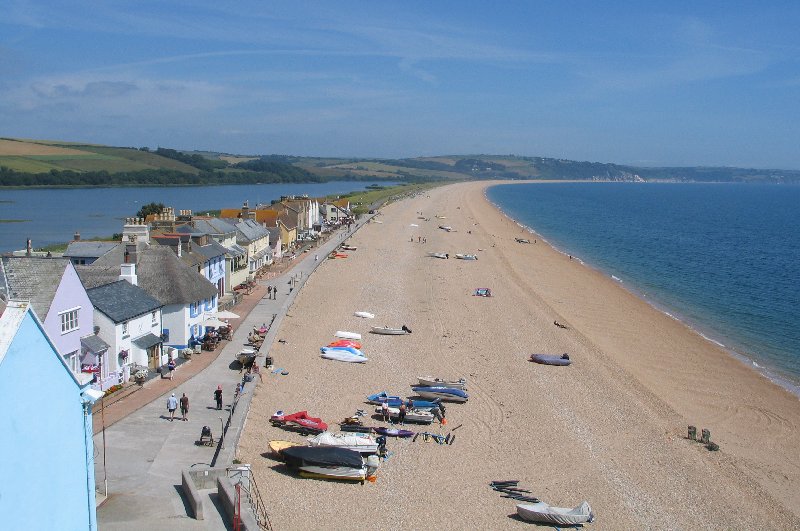 Slapton Sands copyright free
Today there is a memorial at Slapton Sands, overlooked by a Sherman tank. This was recovered from the seabed not far offshore, where it was initially spotted by a local fisherman. Devon resident Ken Small, finding bits of shrapnel and tunic buttons on Slapton beach, researched the records and uncovered the hidden story of Exercise Tiger.
With acknowledgements to Western Morning News, March 21st, 1984 The Guardian, April 27, 2019

