Contents: click on the link to move there
Sister Audrey Cole - awarded the Burma Star
Nurses and Hospitals
Mrs Hilda M. Harris
 Mrs Hilda Mary Harris a Red Cross nurse for her rescue work following the bombing of Second Avenue Teignmouth on 2nd March 1941. A commendation for brave conduct.
 Mrs Hilda Mary Harris a Red Cross nurse for her rescue work following the bombing of Second Avenue Teignmouth on 2nd March 1941. A commendation for brave conduct
Audrey Lynne MBE
Miss Lynne spent 70 years of her life in Teignmouth and contributed greatly to the community. She moved to Teignmouth with her widowed mother and sister to Marine Parade, Shaldon, in 1897, then lived at Westridge, Exeter Road, Oak Cottage, Paradise Road, and Clarina Cottage, Exeter Road.
During the First World War, she joined the Devon branch of the British Red Cross Society VAD division as a clerk and First Aid instructor and became Hon. Secretary of the Teignmouth Belgian Refugees Committee. When the refugees left in 1919 she went on the train with them to wish them well on their voyage home.
 Audrey Lynne during WW1 © IWM WWC D8-6-455
She was awarded an MBE by King George V and the Medaille de la Reine Elisabeth by the Belgian King in recognition of the service she had given. In 1919 she was Chair of the Teignmouth Committee responsible for erecting the War Memorial on the Den and in 1921 she formally handed it over to the town.
Later she was involved in fund-raising for the Red Cross and many other charities and for a new Teignmouth hospital to be built in Mill Lane. During World War II she trained Red Cross nurses and controlled Teignmouth’s First Aid Post as Administrative Commandant. After the severe bombing on 13th August 1943 when 16 properties were demolished and 128 people were left homeless, she set up a Rest Centre at West Lawn School staffed by the Red Cross to house the families.
After the war, she continued to train Red Cross recruits. Her work was recognised by the British Red Cross Service Medal. She died locally in 1967 aged 92.
 Miss Lynne is seen centre, on the right of TUCD Chairman Douglas Chapple, distributing food to the elderly in the 1940s
 Teignmouth Division of Red Cross, Commandant Miss A Lynne MBE
Teignmouth Hospital
Teignmouth Hospital was opened in Mill Lane in 1925 by Lady Cable of Shute House, but building there was not fully completed until just before war broke out. The hospital had two wards with 10 beds each, four private wards, an operating theatre and X-ray facilities.
An air-raid alert had sounded at 11.30 pm, and the services were standing by, but the raid did not begin till 2.15 that night of 8th May 1941. Three bombs fell, on the women’s ward, children’s ward and the nurses’ quarters, and two more in the hospital grounds. Three nurses and seven patients died, and four other patients were injured.
The rescuers searched for survivors by moonlight and hand torches. Beds were buried beneath huge pieces of masonry. The front façade was one of the few walls to remain intact, and all but one section of the building was destroyed.
A nurse working at the hospital later recounted:
“I can only remember what a terrible night that was… I’d just come off night duty… I felt a red hot flash across my face, across my body. The door had blown down and I was standing on it. There was choking dust everywhere… It was pretty terrifying to have to go and try to get these people out with half the building on top of them. You try to shut it away, you try not to remember. We were all such pals, it being a small hospital.”
Mrs Doris Knox and Mrs Amy Wickham from the Red Cross crawled under the rubble to help the survivors until the Rescue team could dig their way through to release them. For this bravery, they were both awarded the British Red Cross Distinguished War Service certificate.
The patients were evacuated to Newton Abbot initially, then alternative accommodation for the hospital was found at Hermosa House in Landscore Road, owned by the Sweetland family. Teignmouth Hospital remained there until the new NHS hospital was opened by the Right Hon. Iain Macloed, Minister of Health, in 1954.
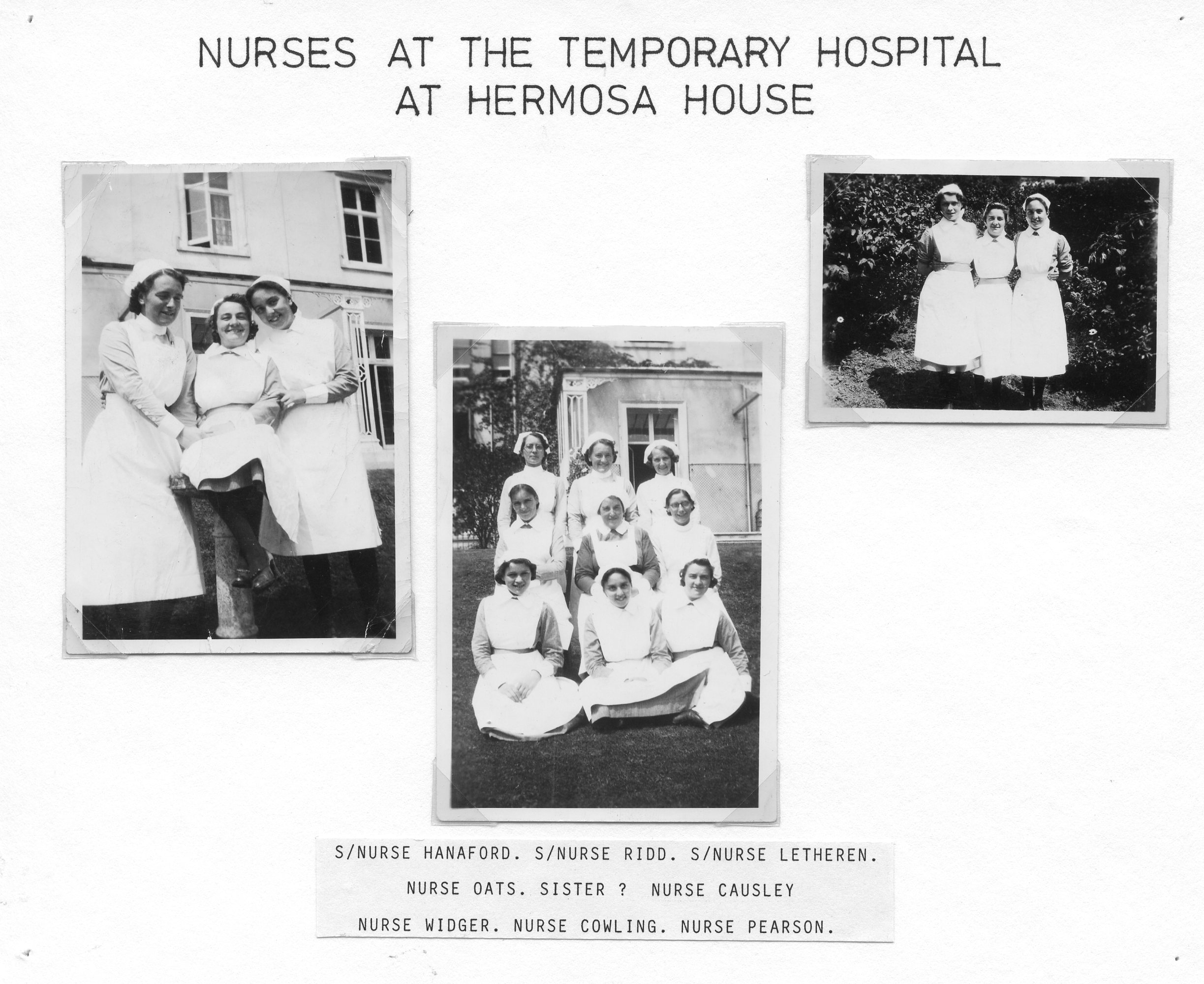 Nurses at Hermosa House
Alice Cross MBE
Alice was born in Exeter of Teignmouth parents and returned here when she was about 2 years old. Growing up she learnt dressmaking but worked from home as well as looking after her 13 brothers and sisters. She did not marry but took care of her invalid mother for ten years.
She spent four years in welfare work for veteran soldiers at the YMCA, then worked for the Waifs and Strays League locally, helping foreign girls in domestic service. She loved acting and folk dancing as well as raising money at Carnival events.
Alice Cross joined the British Red Cross Society and served throughout World War II. When a bomb fell in her garden at Bitton Street she declared “From this disaster came the desire to give thanks for a life spared”. In 1943 she was a founder member of the “Service for Others” (Welfare for the Aged Committee).
After the war, she worked with Teignmouth Old Age Pensioners Association, later the Old People’s Welfare Committee, devoting her time to raising money, organising events and providing services for elderly people not covered by the government. Alice was made Organising Secretary in 1953.
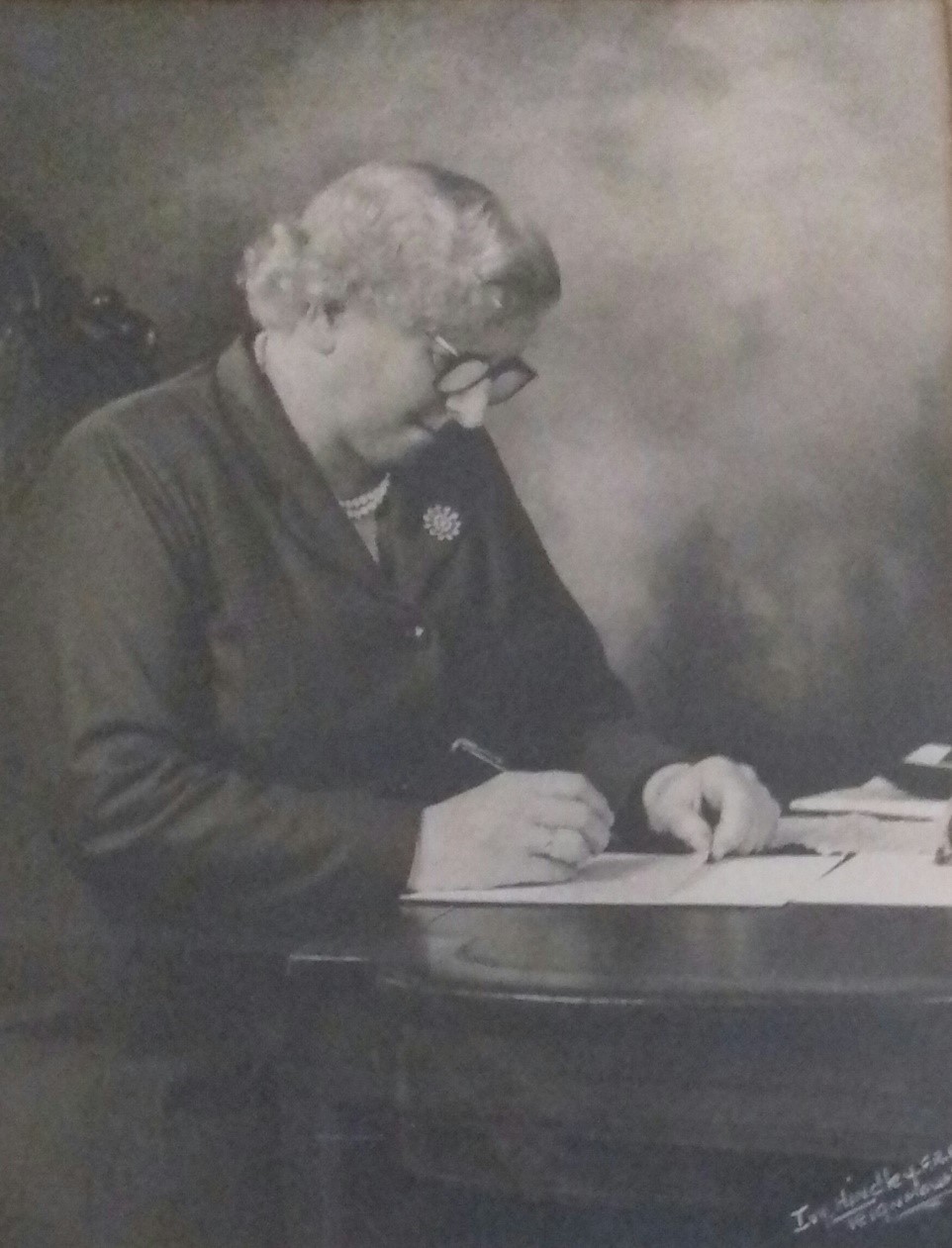 Alice Cross photographed by Ivy Hindley Teignmouth, Devon
A Rest Centre was opened in a Nissen Hut in St James in 1963 but later had to close. Money was raised for a new Centre for the town’s older people and this was officially opened in July 1978. Alice’s many years of service to the elderly was recognised in the name, the Alice Cross Centre.
Alice Cross was awarded an MBE in 1976 for her work for the community. She died in 1995.
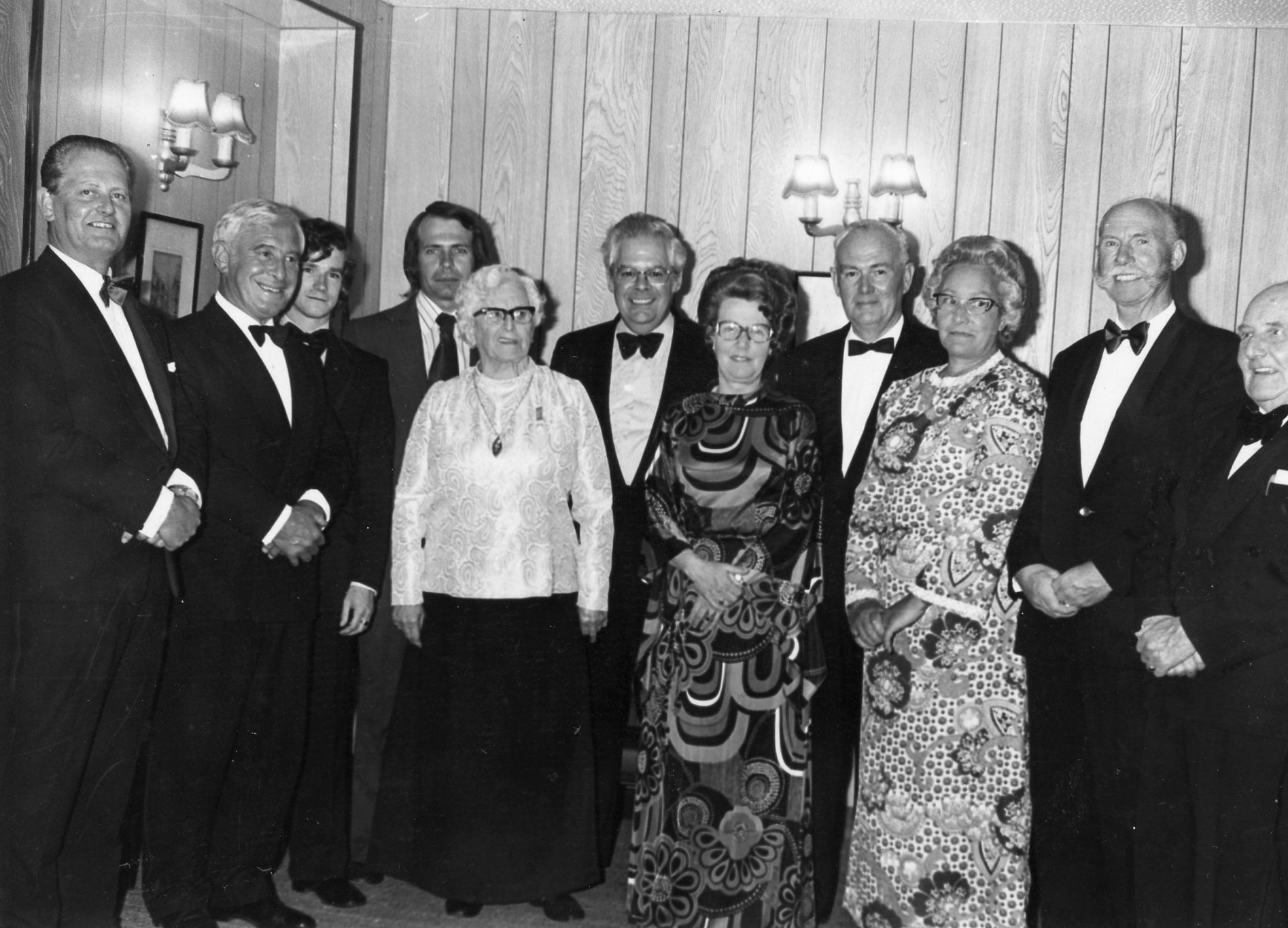 Alice Cross, 3rd from left, at an event in 1979

Sister Audrey Cole Sister at Teignmouth Hospital awarded the Burma Star 1945
Sister Audrey Cole, nee Gard, trained as a nurse in Hampshire. In 1942 she joined the Queen Alexandra’s Military Nursing Service and sailed to India.
From there she was posted to Poona in Burma and stayed there throughout the war tending the sick and wounded servicemen till 1945.
During the war years, she suffered from bad health with malaria, amoebic dysentery, gall bladder and appendix removal. With other nurses serving in Burma, she was awarded the 1939-45 Star, the Burma Star, the Defence Medal and War Medal.
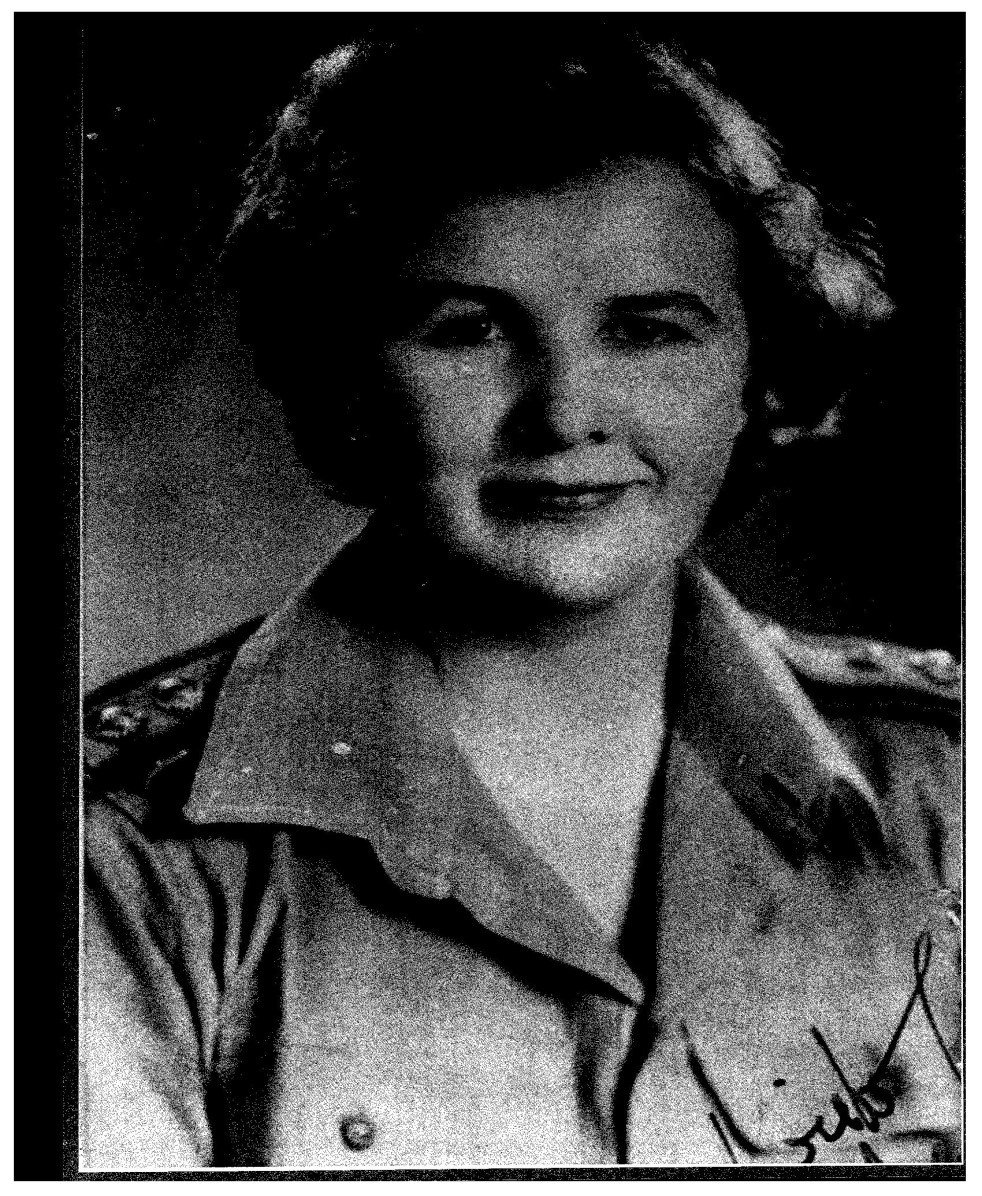 Nurse Audrey Gard in uniform
She returned to nursing at Teignmouth (her sister lived in Shaldon) and became Nursing Sister at Teignmouth Hospital, where she became well-known to local people.
She became a life Vice-President of Torbay & District Burma Star Association, as well as supporting the RNLI, Teignmouth Players and the Friends of the Orangery. She died in 1993.
 Memorial in the Homeyard Botanical Gardens Shaldon, Devon, erected April 1997 by the Burma Star Association
Teignmouth Women in wartime
W.R.N.S – Women’s Royal Naval Service
May Day nee Shorthouse
Rita Menghini nee Boyne
Marjorie Hutchings, then Fleet Air Arm
A.T.S. – Auxiliary Territorial Service
Mavis Hook nee Mole
Hebe Constance Morgan-Giles
Fleet Air Arm
Sheila Day
Jenny Swarbrick
Joan Hodge
Margaret Day
Lil Drew
Ethel Beddall
Joan Palk
Monica Townsend
Amy Beddall
W.A.A.F. – Women’s Auxiliary Air Force
Joyce Garside nee Nicholson
Edith Tranckle nee Tooley
Women’s Land Army
Lillie Stead
The Red Cross Audrey
Lynne Nellie
(Nurse) Bell
Doris Knox
Amy Wickham
Joyce Rodwell nee Mole
Alice Cross
A.R.P. Warden
Kathleen Mary Marinkovic nee Barge
Fire Service
Emma Dewey nee Hooper
Mrs Rudd
Joyce Cockram
Eileen Stowers nee Westlake
Joan Broom
Maureen Day
 WVS Western Morning News December 1940
Shaldon Women in wartime
W.R.N.S – Women’s Royal Naval Service
May Babbage
Joyce Ingram
Maisie Bragg
Betty Nepean
Rosa Blake
Mary Ford
Mary Ellyatt
A.T.S. – Auxiliary Territorial Service
Miss Blackey, F.A.N. Y
Lily O’Gorman
Mavis Mole
Mary Dart
Margaret O’Gorman
Betty Thomas
Frances Finch
Patricia O’Gorman
Helen Williams
Joan Lesley
Violet O’Gorman
Vera Brenton
Enid Northey
Mary Roberts
W.A.A.F. – Women’s Auxiliary Air Force
Mary Back Mary Ryan
Joyce Hall
Joyce Bulley
Joan Sutton
Elizabeth Ball
Women’s Land Army
Tommy Strang
Gladys Back
Hazel Jackson
Joan Grant
Eileen Hook
The Women’s Section of the British Legion knitted socks, balaclavas, gloves and scarves for the servicemen stationed in Shaldon and sent parcels to those stationed away from home.
W.V.S. – Women’s Voluntary Service at Forces Canteens in the Parish Hall, Ringmore Road, Shaldon, and later at the Liberal Club, Riverside, Shaldon.
Mrs Ellyat
Mrs Emily Mole
Mrs S Stillman
Mrs Barratt
Mrs W Mole
Mrs Aldridge
Mrs Back
Mrs Mabel Mole
Mrs Journeaux
Several Shaldon women undertook industrial war work, some at Morgan Giles shipyard in Teignmouth.
Calling all women!
At the start of the war, women were encouraged to join up in the Armed Forces or work in essential occupations such as farming, baking or schoolteaching.
Each of the Women’s Armed Services was reorganised. The Auxiliary Territorial Service had been formed in 1938 and the Women's’ Royal Naval Service, re-formed in April 1939, which meant women were posted to every naval unit at home and abroad. By 1944 there were over 72,000 Wrens.
ATS pay parade at HQ Eastern Command Hounslow, 1940
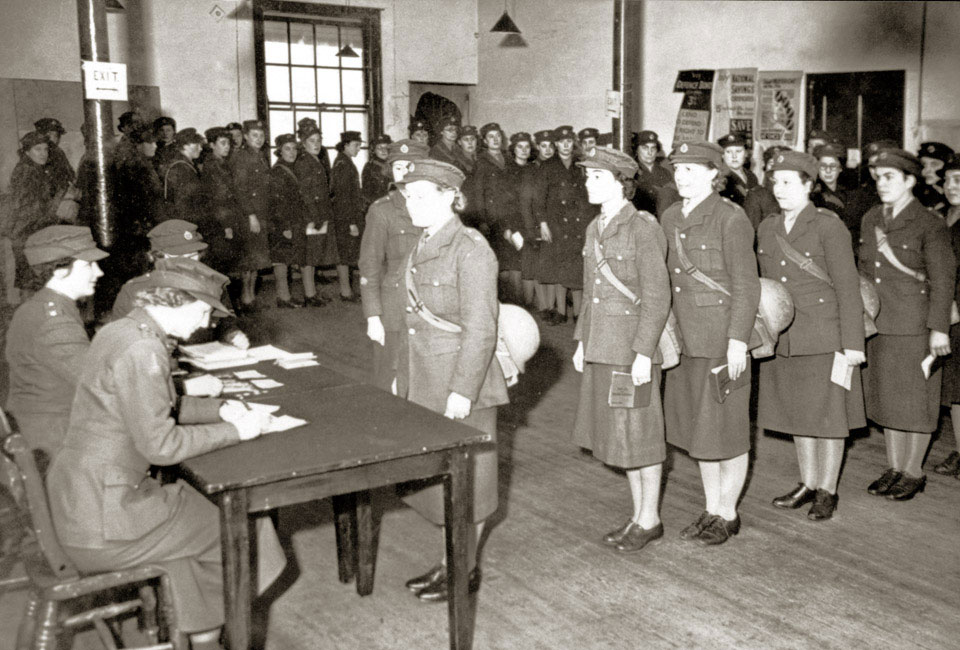 ATS pay parade at HQ Eastern Command Hounslow 1940 NAM. 1997-08-45-5 Not NAM Copyright
Over 250,000 women served in the Auxiliary Territorial Service (ATS) during World War Two. They served in many overseas theatres of operation as well as in the defence of the United Kingdom, particularly in Anti-Aircraft Command.
ATS women also served as drivers, orderlies, store women and cooks.
 Auxiliary Territorial Service ATS marching through Colwyn Bay World War Two NAM. 1995-02-67-49 National Army Museum, Out of Copyright
Auxiliary Territorial Service (ATS) marching through Colwyn Bay
An Auxiliary Territorial Service (ATS) unit marching in full uniform and kit, proceeding a unit of men. The parade is marching in the middle of the road down a shopping street, flanked by crowds of civilians.
The ATS was the women's unit formed in 1938. Initially, similar to it's First World War predecessors the Women's Army Auxiliary Corps, the ATS were employed in non-combatant roles such as cooks, clerks and drivers.
The Women’s Auxiliary Air Force was created in 1939. Other options were to volunteer for the Women’s Land Army, which was re-formed in June 1939. By January 1940, 4,696 women had been recruited and this number continued to grow so that by January 1943 there were 53,645 Land Girls.

In 1944 recruitment stopped because more women were needed in the aircraft industry, but later stepped up again to a peak of 80,000.
A major voluntary organisation was the WVS, the Women’s Voluntary Service for Civil Defence, who took on a variety of jobs, organizing evacuation, shelters and accommodation for people made homeless by air raids, running rest centres and mobile canteens, and harvesting rose hips for juice.
In March 1941, there was a new national appeal for war service, and every woman from 18 to 60 had to be registered at the local Labour Exchange and their family occupations recorded. Each was interviewed and required to choose from a range of jobs in the Armed Forces, farming or industry.
By December 1941, conscription to the Services was required for young women and all unmarried women and childless widows between the age of 20 and 30 were liable to be called up. This was later extended to the ages between 19 and 43. By December 1943, almost 90% of single women and 80% of married women were employed in essential war work, and one in 3 factory workers were women making planes, tanks, guns and munitions.
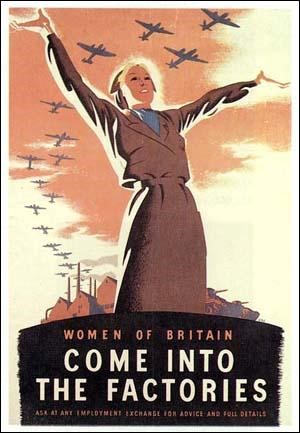 Women of Britain Come Into the Factories
Women at work in Teignmouth
Teignmouth women were part of national regulations for women to play an equal role with men in contributing to the war effort. Many joined the Armed Forces and those joining the local voluntary services were urgently needed as the town became a target for bombing raids.
In Teignmouth, there were qualified firewomen in the Fire Service and there was a number who were employed at Morgan Giles shipyard. The latter worked as riveters on the production of motor torpedo boats and motor gunboats, which one described as “heavy but not daunting”. They were also in the paint shop, rubbing down the hull with sandpaper and painting it battle grey. These women included:
Joyce Lane, nee Ingram
Pearl Carr
Peggy Brown
Doris Wood, nee Robbins
Kathleen Eggbeer
Pearl Sampson
Sheila Graeme
Mrs Woodley (or Woodleigh) was the Forewoman
As plans for the Normandy invasion expanded locally from 1943 onwards, women were involved in several aspects of the attack. By 1944 the Teignmouth Post for January 28th reported that even 16-year-old girls were required to register for service at the local Ministry of Labour and National Service.
The women in the Fleet Air Arm Service worked at Marina Hotel, at the end of Powderham Terrace. They prepared food for the servicemen in the top-secret communications centre in the basement. Meanwhile, there were 25 Wrens in service with 60 ratings and 35 officers at HMS Mount Stewart, a shore establishment specializing in irregular warfare. This unit was based at the Royal Hotel and had Glendaragh Hotel as a Wardroom.
The local WVS was instrumental in organizing the influx of evacuees in 1939, 1941 and 1944, as well as being given other tasks. A Council report in the Teignmouth Post for January 7th 1944 said that “the collection of bones [for fertilizer] was not at all satisfactory… the surveyor would ask the WVS if they could improve on the present method of collection.”
In a letter to the local paper, Teignmouth Ladies Sewing Guild (WVS, St James Working Party and Eastcliff Ladies) were praised for doing “a truly grand job”, mending over 100 bundles of clothing each week for the benefit of troops. “Very often the garments needed large patches.”

