Corporal L Bulley
No 1, Platoon, C Company, Teignmouth Home Guard
The Home Guard
Following the fall of France, the Right Honourable Anthony Eden, Secretary of State for War, broadcast an appeal on the 14th of March 1940, for men to form a force which would be known as the Local Defence Volunteers.
 Home Guard Teignmouth 1941
On 30th July 1940, the Local Defence Volunteers were renamed the Home Guard, and under its new title, it became a much more military-like affair. With the reorganisation of the Home Guard battalions were formed. The county of Devon had 25 General Service Infantry Battalions, plus Rocket Anti-Aircraft Batteries and Motor Transport Companies.
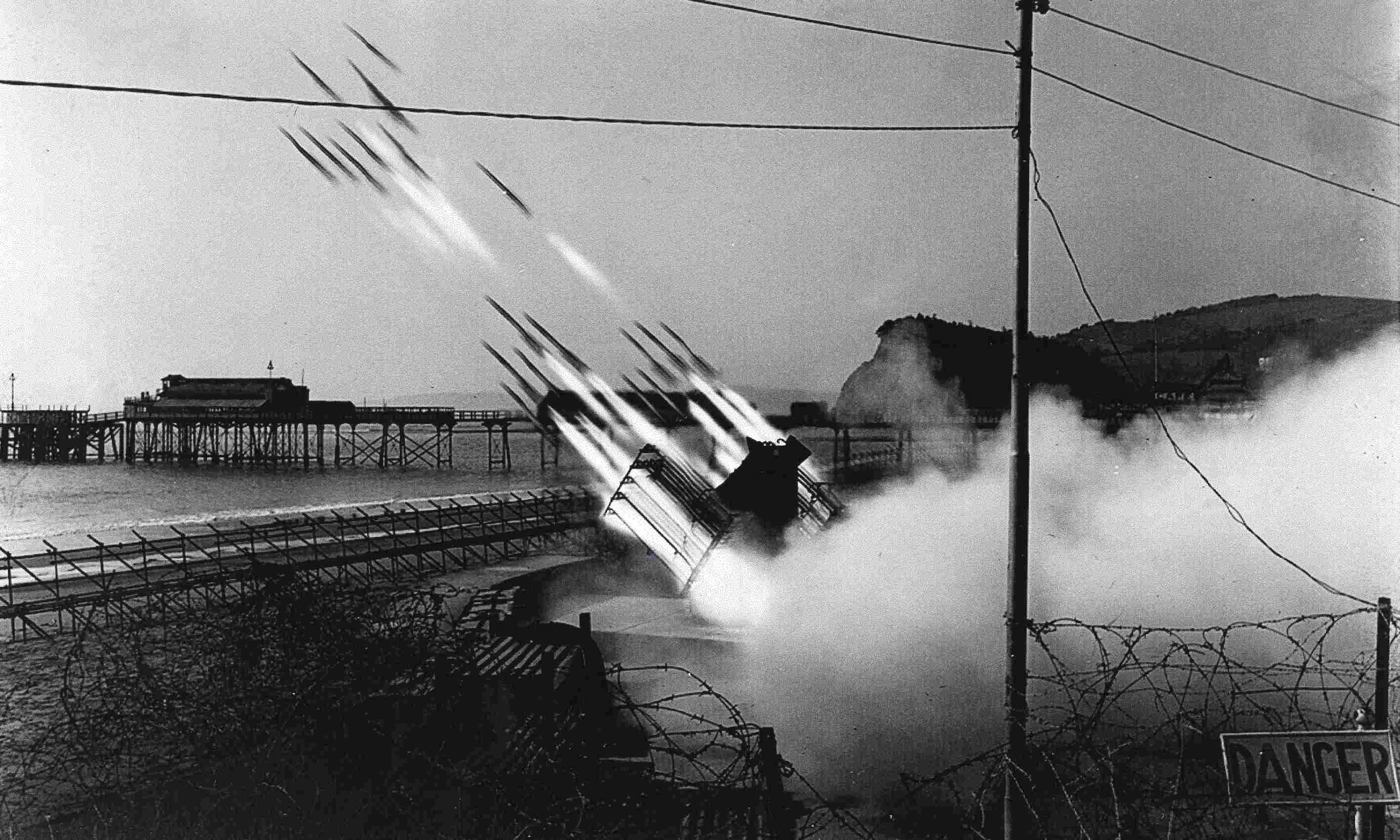 Rocket practice from the Den
The only uniform that was issued to this early force was an armband inscribed L.D.V; other equipments and weapons were in short supply. The Devonshire Regiment Home Guard 9th (Newton Abbot) Battalion was comprised as follows: A Company Newton Abbot B Company Dawlish C Company Teignmouth, Shaldon, Bishopsteignton D Company Newton Abbot (Rural) E Company Electric Light Company G Company Great Western Railway H/Q Company Newton Abbot (South Devon Mobile Company).
C Company was made up of units at Teignmouth, Shaldon, and Bishopsteignton all under the command of Major H.G. Bigg-Wither, D.S.O. In Teignmouth, there were the Teignmouth No 1 Platoon and the Morgan Giles Platoon, made up of the workforce under the command of Lieutenant R.W Broom.
The Shaldon Platoon came under the command of Colonel Pinager, and its Headquarters was Percy’s Garage (now Sleeman Hawkins) in Bridge Road. By 1941 the Head Quarters had moved from Bridge Road to a building near the old Post Office in Fore Street.
 Home Guard training on Haldon
The Electric Light Company Platoon was under Captain P.S. Grant. In Shaldon the village platoon was known as No 2 Platoon, its officers were Lieutenants, A.W.Woodgates, C.G.Watton and … Nicholls. Later a second platoon was raised which included some of the No 2’s men, as well as men from Teignmouth.
This was known as the 17th (Royal Artillery) Platoon (Ness). The officers of this platoon were Lieutenant A.R.Drake, Lieutenant P.J. Knibbs and Captain H.H> Holloway. The Home Guard mounted nightly patrol and if the Air Raid siren sounded then extra patrols were sent out.
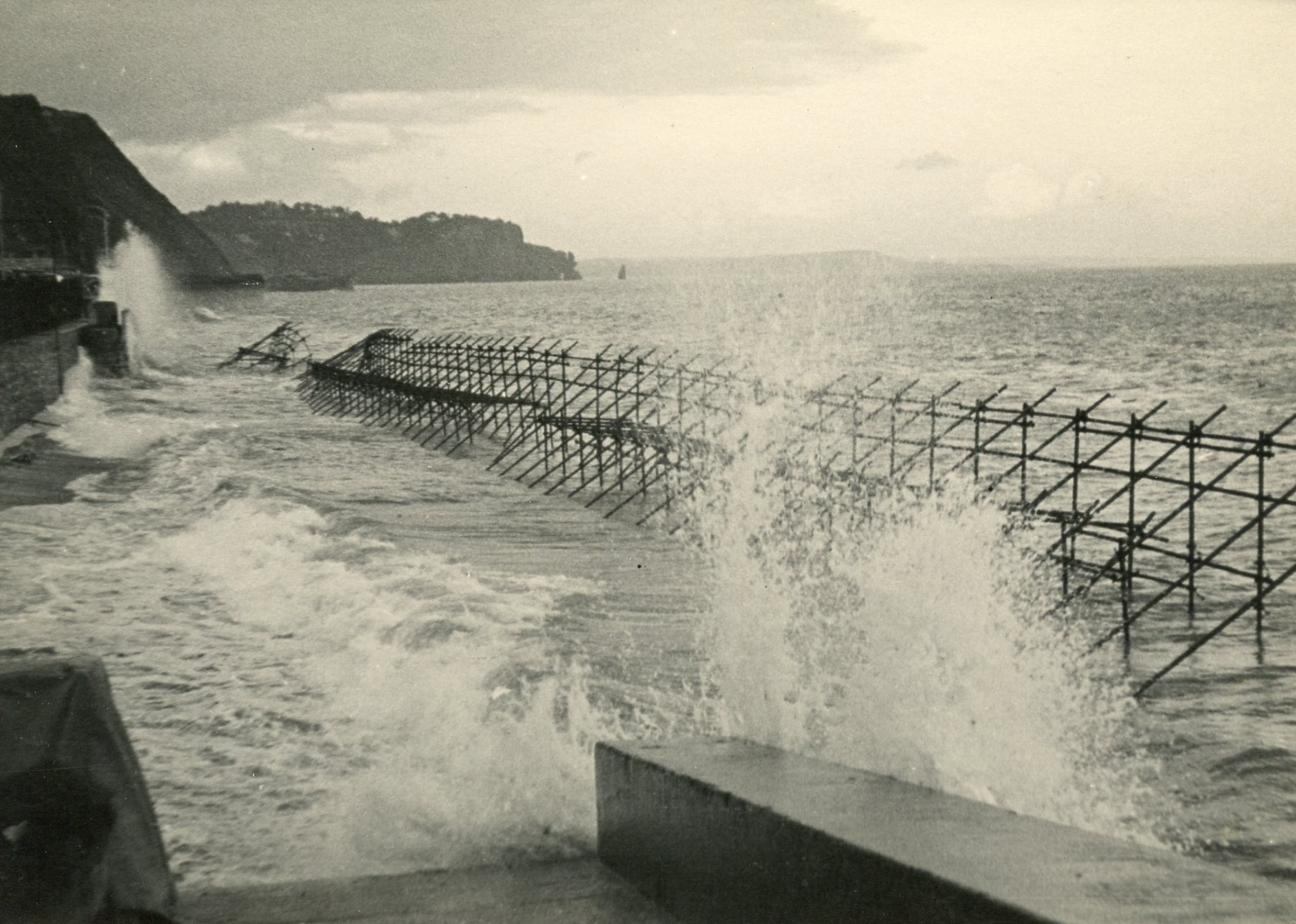 Sea defences, 1940
The army regiments that were stationed in Shaldon also mounted patrols and at the height of the threat of invasion, the army manned dug-outs and firing points positioned all along the front. Their positions were constantly manned particularly in the early hours just before dawn.
There was also a Home Guard sentry post on Shaldon Bridge at the entrance to the embankment. Training invariably took place two nights a week and on Sundays. An assault course was set up in a field near Labrador where the men could practice the use of hand grenades.
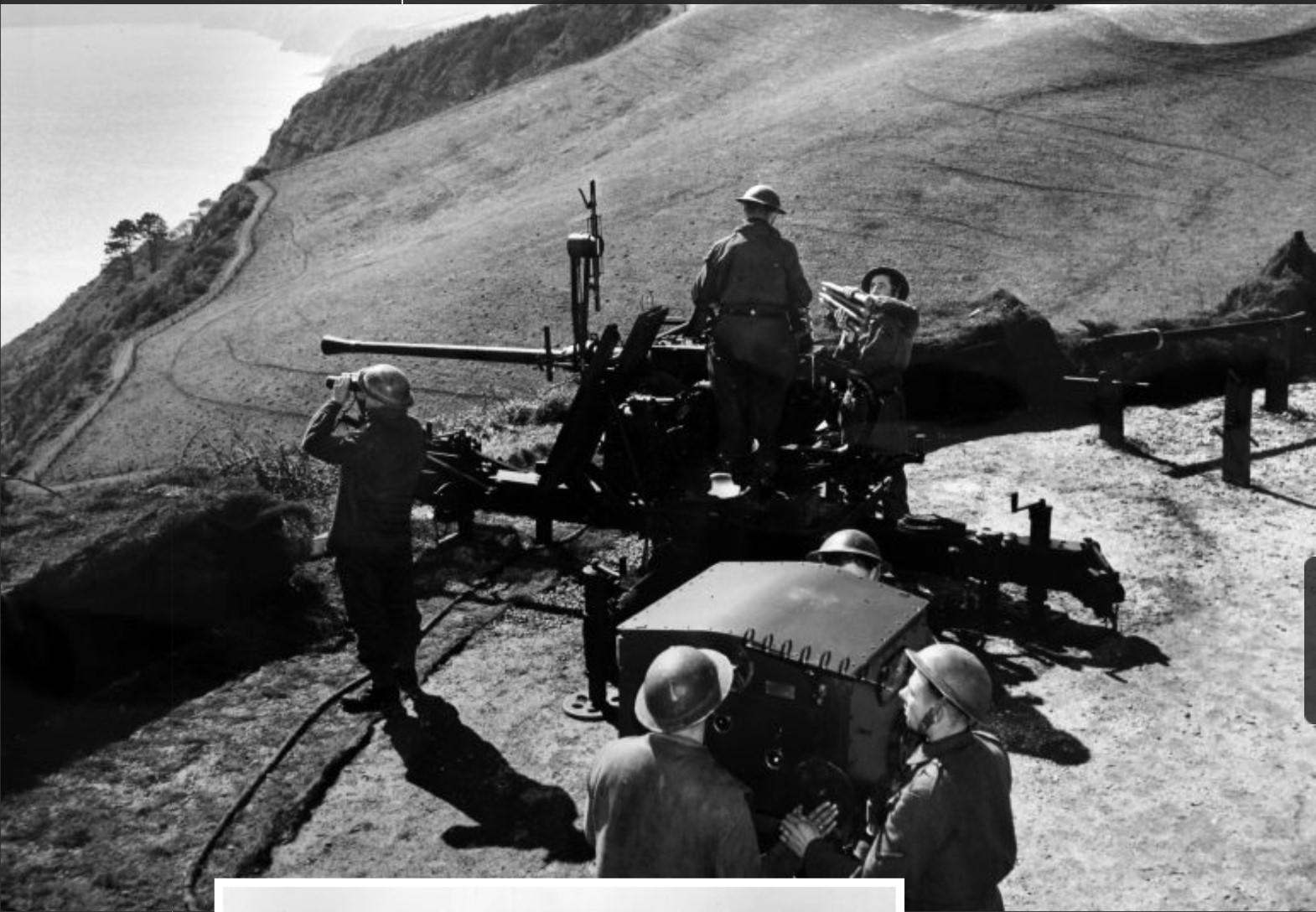 Labrador Bay
Their camp was down a steep lane at Maidencombe, but the Devon General bus that took them there could not easily cope with the gradient, so the Home Guards had to push it as it reversed uphill!
As the Army went further afield, the Home Guards took over the local defence. The rifle range was at Starcross. The five tunnels between Teignmouth and Dawlish were guarded at both ends particularly when invasion fears were at their highest in 1940.
No 17 (Gunners) Platoon. C Company. 9th Battalion. Devon Home Guard.
No1 Gun, this and No 2 Gun was 4.7in (120mm) QF Naval Guns on pedestal mountings. Probably either Japanese built M1917 or from a batch of 24 Elswick-built or 13 Mark IVJ 4.7in transferred from the Japanese Navy during or soon after WW1 and used by the British as Coast Defence weapons in WW2. The Guns was housed in a large brick and wood structure camouflaged to look like a boathouse.
Each Gun had a crew of seven No1, was the N.C.O. operates lights, in charge of the gun. No2, Operated the Breach. No3, Loaded the Shell, then helped No4, who Rammed the shell home. No5, Loaded the charge. The Gun-Layer and The Sight-Setter targeted the Gun.
The Guns, Searchlights and Engines were manned by men of 362nd Coast Battery, part of 555 Coast Regiment Royal Artillery, and by the men of the Home Guard.
 No 17 Gunners Platoon C Company, 9th Battalion Devon Home Guard, 1944
Photo 1944. Rear Left to Right: George Highgate, Farmer, Knight, Fred Quantick, Jack Coysh, Ron Sweetzer, Durgess, Sidney Ellyatt, George Laskey, Daunt, Unknown, Winstanley, Bill Osborne, Payne, and Robbins.
Front Left to Right: Edgar O’Gorman, Dick Broad, Walt Tothill, Alf Satchell, Lt A R Drake, Lt Harold Holloway, Lang, Stan Hook, Geoff Blacker, Jack Boyne, and Shillan.
No 17 Platoon (R.A.) Platoon Stand Down Parade, Sunday, Dec 3rd 1944, The Den Teignmouth.
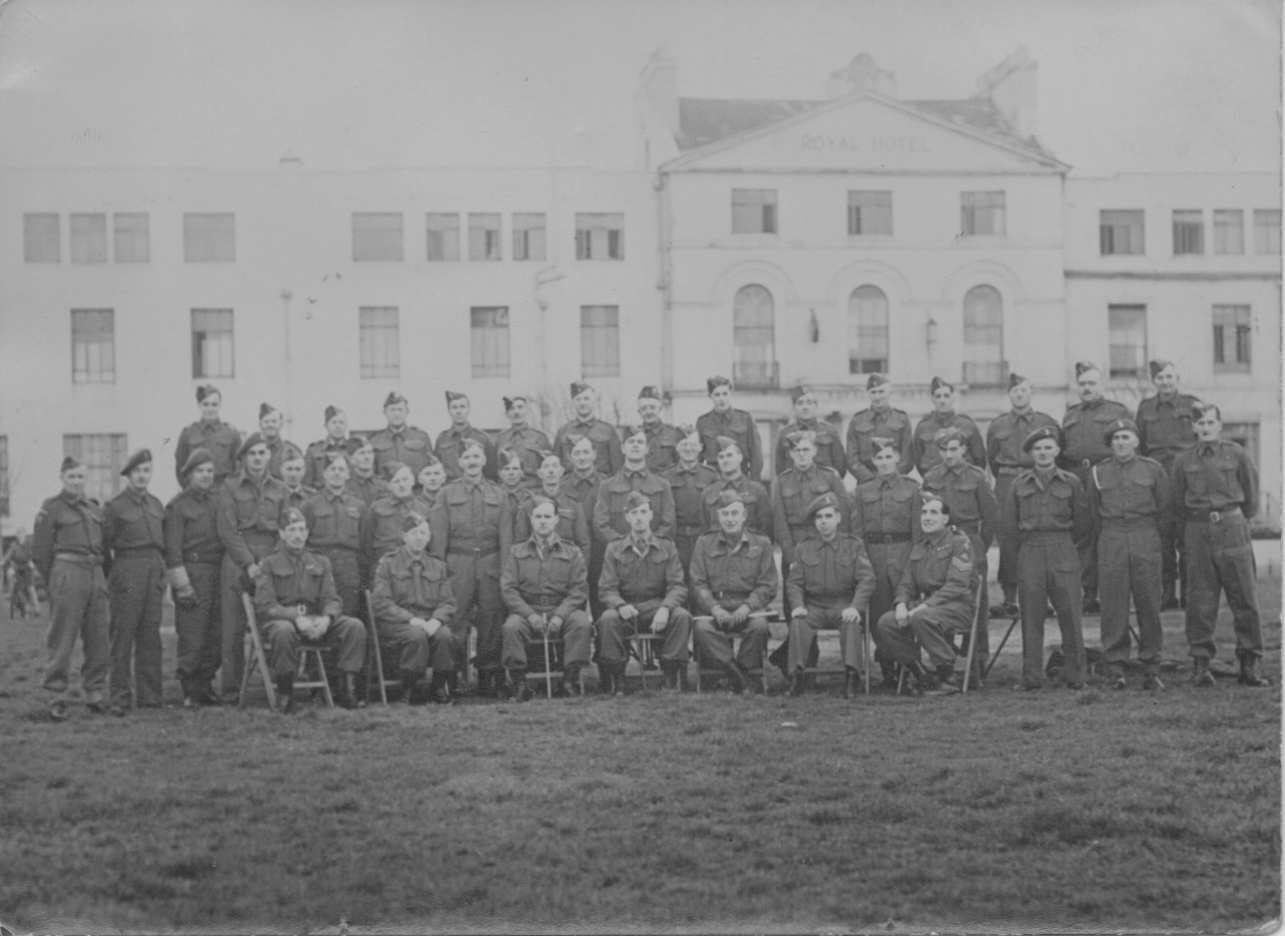 No 17 Platoon R.A. Platoon, Sunday Dec 3rd 1944, The Den, Teignmouth, Devon
Rear Left to Right: Ron Sweetzer, Knight, Unknown, Sidney Ellyatt, Butcher, Charles Dart, Unknown, Sam Cook, Mills, Bill Cann, Burgoyne, George Highgate, Payne, Jim Mosley, and George Laskey.
Middle Left to Right: Unknown X5, Farmer, Durgess, (Shirley) Towler, Bill Osbourne Tribble, Fred Quantick, Edger O’Gorman, Jack Coyse, Dick Aston, Daunt, Dick Broad, Geoff Blacker, Jack Robbins, Shillan, Dave Milne, and Unknown X2.
Sitting Left to Right: Walt Tothill, Lang, Peter Knibbs, AR Drake, Harold Holoway, Unknown, and Alf Satchell.
Men in Berets are members of 362 Battery Royal Artillery.
No17 (Gunners) PlatoonOutside The Ness House, 1942
The Ness House was the Battery Headquarters, Accommodation and Cookhouse of the 362nd Coast Battery, which was part of 555 Coast Regiment Royal Artillery. It was also the Headquarters of No 17 (Royal Artillery) Platoon, Shaldon Home Guard part of C Company, 9th Battalion, The Devonshire Regiment, Home Guard.
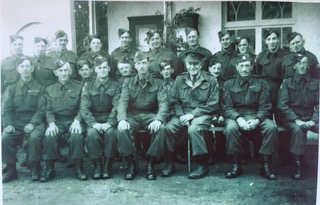 No17 Gunners Platoon Outside The Ness House 1942
Rear Left to Right: Jack Robins, Steve Upchurch, Jack Matthews, Ron Cload, Stan Hook, Jack Coombes, Jack Coysh, Bill Tanner, Lionel French, Ron Rodwell, and Shirley Towler.
Centre-Left to Right: Bill Steer, Cook, Charles Dart, and Michael.
Front Left to Right: Edgar O’Gorman (Cpl), Lawrence Mole (Sgt), Dick Broad (Cpl), Lt AR Drake, Captain H Holloway, Walter Tothill (Sgt), and Winstanley.
No17 Platoon Stand Down Parade, 1944
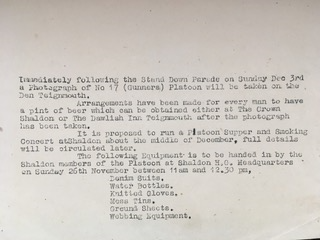
 No17 Platoon Stand Down Parade, 1944
Teignmouth Platoon, 1941/42. E (Electric Light Company) 9th Battalion Devon Home Guard

Rear Left to Right: Bert Foster, Fred Durman, Bill Saunders, Jim Furler, and Alfie Howe.
Centre-Left to Right: Ally Bryant, T W Brealey, George Shapter, George Cornelius, Jim Northcot, Jack Drew, Alf Satchell (Sgt), Brooks, Harry Kelso, Fred Retalick, Nibser Clarke, and Bert Rendell.
Front Left to Right: Lt Archie E Palmer (2i/c), Lt Harry Matthews (attached), Captain PS Grant (O.C.), Lt WG Guscott (attached), and Lt Mark Andrews (Bn Liaison).
The photograph was taken on the Quay, Teignmouth, Devon.
With acknowledgement to Tim Mole and Viv Wilson.

