Contents: click on the link to move there
Wartime Snippets from Shaldon, by Caroline Luff
Extracts from the weekly ‘Story of Tozers’, from Richard King
Email from Chris Browning
How I Survived a Direct Hit from a Hit and Run Raid by Marjorie Hitchings, Teignmouth, Devon
I Remember .... Chapter One by carolynchoir
Rex Hitchcock recounts the harbour in wartime and the changes as the Americans moved in for the build-up to the Normandy invasion
Pauline Seaton, Jean Potter, and Kathleen Butler remember when WW2 was announced, then the bombing raids, the shelters, the raid on the school and the hospital in particular.
Misfortunes of War - StokeinTeignhead
https://www.bbc.co.uk/history/ww2peopleswar/stories/95/a3943695.shtml
Brook Hill School during World War 2
Brook Hill School during World War 2
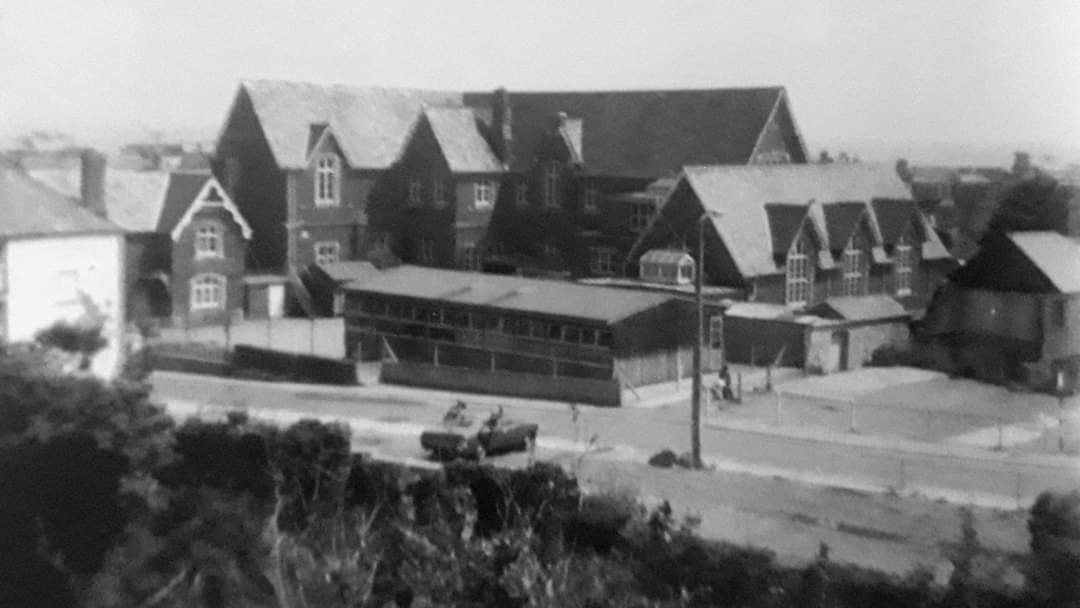
Selected extracts from the logbooks (written by the Headmaster Mr John Whitear)
Brook Hill School opened as a newly made Junior and Infant School in 1938, formed from the previous Girls and Infants schools there and the Boys School from West Lawn.
There was the Head of the Juniors and 6 staff, with 233 children on the registers, and a separate Head of Infants, staff and children.
Wartime 1939 -45
1939
September: 400 evacuated children were sent to Devon from Acton in West London. 195 went to Dawlish and 205 to Teignmouth Brook Street. After being given tea they were billeted with families.
November: Acton children were relocated to Exeter Rd old school building with their teachers.
1940
Gas masks arrived for each child, were tried on and tested.
1940-43
Many daytime air-raid alerts. Children sheltered under their desks or in the basement.
October: 210 more evacuees arrived with their teachers, then 51 more. Some children were sent home when the siren sounded as there was not enough room in the basement for all the children.
Children helped with the war effort by planting potatoes during the Easter holidays. They collected 58 pounds of rose hips which were sent to a fruit juice firm in Bristol.
1941
May: Shelters were built in the playground to give the children more protection from air-raids.
December: The whole school was invited to the cinema for a film show and the evacuees had tea and a party afterwards paid for by London County Council.
1942
Between February and July, there were 12 daytime air-raid alerts during school time when children had to take cover.
August: and September: The school ceilings were damaged by bomb blasts and glass in the windows were shattered. In September there was no warning so there was no time for the children to go to the shelters. Books and furniture were moved to the Senior School and the Parish Hall in Exeter Street. Many children were being kept at home by their parents for safety.
1943
Between mid-January and mid-February, there were 17 daytime alerts, including 4 on one day.
December 7th was the date of the last air raid warning recorded in school time.
1944
By April, the situation was much calmer and the use of the Parish Hall was discontinued. The desks were moved to Exeter Rd. old school building.
July: 250 more evacuees came and then 98 more. The school returned to the Brook Street building.
1945
May: End of the war - the school closed in celebration and 100 children and 7 teachers took part in a Thanksgiving Service on the Den.
* Brook Hill School is mentioned in the Evacuees
Wartime Snippets from Shaldon, by Caroline Luff
These are a few memories from what my mother Peggie O’Connell told me.
My mother was 21, three days after war was declared. My grandmother wouldn’t countenance her joining the forces. She worked in the Post Office with the Harrisons until about a week before I was born in May 1944. (I can remember the PO which was then just below Hunters’ Lodge on the opposite side of the road – I have a memory of sitting on a bench licking the cellophane paper which wrapped Gibbs toothpaste – not a tube, but a flat round cake of solidified tooth powder!!) Because the telephone exchange formed part of the premises, the family knew everyone’s business in the village…
At one point a detachment from the Buffs Regiment of Kent and Sussex was stationed in the village, one billet being what is now The Presbytery, next door to St. Ignatius’ Church.
My Father, Owen O’Connell, who came from Brighton, was one of the men and one day he noticed my mother in the street. Things gradually progressed from there to their wedding in August 1943. They honeymooned in London, a city which held deep meaning for them, not just because of the honeymoon, but also as the centre of the war effort and from where broadcasts went out widely – “London Calling”.
History was repeating itself very forcibly, as during the First World War, Peggie’s Father, George Grant from Essex, was also stationed down here and met Maggie Hosegood, the daughter of the tailor at 45 Fore Street and a teacher in Shaldon School. They were married in 1917 and Mother arrived in September 1918.
My Mother’s sister Joan carried out her war effort in the Land Army working for Reggie Towill, who farmed in Ringmore and subsequently married him in 1945. The family did their part in welcoming men from the forces for meals and in supporting various local efforts. My Grandfather joined the Home Guard.
One incident stuck in my Mother’s mind. She had walked from their home at 2 The Hamiltons to meet my Aunt from work when a German plane flew over, so they leapt into the hedge opposite Fonthill. She remembers being able to see the pilot. This was the plane which dropped a bomb on the Green, which bounced up into the allotments. The explosion shattered the windows in the Hamiltons and split the wooden case of their grandfather clock. I have that clock, still with the split.
Their garage, which doubled as their air-raid shelter, was under the lawn at the front of the house and whenever there was an air raid, my Grandfather made it his first task to take me in my carrycot to that shelter.
Another occurred when my Father had a brief leave and they took a picnic Sunday lunch up to Fuzzy Dee. That was the afternoon when St. Marychurch was bombed and a number of children killed. They saw the plane shot down over the sea and said they stood and cheered!
My parents didn’t dwell on the war, except to remark that it shaped their lives and they had to live through long separations and, of course, many privations. There was also the constant anxiety of bombing, fighting and not knowing that Britain would prevail. It lasted a long time too. Very oddly, I have to say that I owe my very existence to Hitler, as do so many of my generation.
Extracts from the weekly ‘Story of Tozers’, from Richard King
Conditions in the early 1940s during the 2nd World War were very trying, with the loss of young lawyers to active service and the real risk of being bombed so close to Teignmouth docks and the Morgan Giles factory which made motor torpedo boats.
Indeed bombing began in July 1940 and for a time the Teignmouth office moved out to Stapleford in New Road.
But life continued. There were still office parties and dinners at the old Royal and Seacroft Hotels, and the 1940 Christmas party was held at the Talbot in Bitton Park Road.
In his ‘History of Tozers’ (1988), Arthur Radford described some of the difficulties experienced in the firm, 6, Carlton Place/Brunswick Street office of Jordan & Kennaway, which was run by Tozers partner Charles Procter, was closed as it was even closer to the docks, and the staff moved to Orchard Gardens.
There the strongroom (still in use) was used as an air-raid shelter, and during one heavy raid, a bomb blast almost blew the heavy door shut, with all the staff crowded inside and no means of opening it! Later on, the rear windows were blown out when another heavy raid destroyed most of Higher Brook Street (pictured, the site of the Fire Station, Lidl and the road past the Station).

At the time, Mrs Clampit the office caretaker was carrying a tray of crockery down from the top floor kitchen; she survived but the crockery didn’t.
All business was done face-to-face in those days, and there was no technology for home working! Not surprisingly, clients were very reluctant to come to the office in such a dangerous area.
It was decided to relocate to Stapleford, a large property on New Road near what is now Trinity School, which Tozers shared with estate agents Robert Frost & Son which had vacated for the same reason.
It was from Stapleford, in early June 1944, that the staff were able to see line upon line of ships assembling for ‘D-Day’, the start of the liberation of France in which our Tony Sutton was much involved….
Memories from Pam Laister
Email from Chris Browning
My grandfather, who lived in what is now known as Bitton Park Road, moved to my aunt's house in 2nd Avenue when the bombing got too close to his house. She already had 2 Belgian refugees, Ernest and Malvine Boveyn, staying with her. There was scaffolding on the beaches in order to prevent a land assault.
How I Survived a Direct Hit from a Hit and Run Raid by Marjorie Hitchings, Teignmouth, Devon.
I was born in Teignmouth, and in the 2nd World War joined the W.R.N.S., training as a telephonist.
It was on Sunday, January 10th, 1943, that I went on duty at the Royal Hotel, Teignmouth. There had been flying practise all morning. I was due to finish my duty at 1 p.m., but the Wren replacing me missed the ferry from Shaldon to Teignmouth, so I stayed on taking messages. A signal came in that all flying had been cancelled and any planes heard would be enemy ones.
When I got home to my parents' house, we were having dinner when I heard a plane. I knew it was not ours, so we rushed to the Morrison shelter on the ground floor, and just as my father pulled himself in an explosion happened. We had a direct hit - our house was completely destroyed. We were pulled out of the shelter and the Salvation Army were there to help us.
Fate, without doubt, played it's part that Sunday because if I had come off duty at 1 p.m., I would not have taken the message that saved our lives!
‘Marjorie Hitchings, WW2 People's War' 'WW2 People's War is an online archive of wartime memories contributed by members of the public and gathered by the BBC. The archive can be found at www.bbc.co.uk/ww2peopleswar'
I Remember .... Chapter One by Carolyn Choir
Teignmouth (1938-1942) — My early recollections In 1938, when I was 14 years old, I heard on the radio our then Prime Minister, Neville Chamberlain returning from Germany, leaving an aircraft and waving an agreement that terms had been agreed with Adolf Hitler, that it was peace.
Many elderly people doubted this so-called pact. Black clouds were visible. In the meantime, England sat back and yet there was an air of urgency. Plans were put into effect for civilians to be issued with a gas mask or respirator. The Territorial Army (a voluntary trained force) was mobilized.
It was Hitler's intention to annex Poland, but we, in England stood by the Poles. We had given Poland an assurance we would defend her borders. Our country had a year's extension, but war clouds were gathering and the threat became more than apparent. Nazi Germany, under Hitler, was rearming fast.
On 3rd September 1939, German troops had crossed into Poland, preceded by heavy bombing of the cities and towns with aircraft. I had been to chapel at Teignmouth that morning and it was announced by the preacher that as no reply had been received from Germany at 11am, we had honoured our pledge to Poland and were now at war.
We sung ' God save the King'. On leaving chapel, several of us, boys and girls congregated under the Drum Clock in the centre of Teignmouth and made speculations about our families, especially elder brothers and sisters joining up in the Services.
The mobilization of our Armed Forces (the army, territorials, navy and air force) was speedy and they crossed over to the Continent. France had prepared a fortified concrete line along the NE border with Germany, known as the Maginot line. It was obvious that Germany had been rearming and had thousands of men, under Hitler's command, intent on taking the whole of the Continent.
Our Army - the British Expedition Force, as it was known, was occupied in holding Belgium and Holland and instead of attacking the Maginot Line fortifications, Hitler's forces moved down through the Low Countries, Belgium and Holland to northern France. Eventually, our troops retreated under orders, against a formidable force of bombers, dive-bombers and tanks to the coast of France at Dunkirk.
It was here that there was such a disaster for the Allies. My home was Teignmouth, on the South Devon coast. Every available vessel, motor boat and even small rowing boat was taken in tow from there and elsewhere to assist in the operation to evacuate the troops from the beaches and ferry them to bigger naval vessels in the English Channel, back to England, beginning 4 June 1940.
Acts of great bravery were performed and by a miraculous feat, some 338,000 men were saved, although we had lost thousands of men and most of their equipment. Mind you, those that were evacuated, had only what they stood up in. If Hitler had sent a few thousand men across to England, we would have capitulated.
Nevertheless, the determination of our countrymen, hailed by the then Prime Minister, Winston Churchill's speech in the House of Commons, after the Dunkirk evacuation 'We shall defend our island, whatever the cost may be……we shall never surrender,’ gave the country a solid determination to resist and exist. Being on the coastline, Teignmouth was virtually our Front Line defence.
Returning from France, the troops, downtrodden, unkempt, tired and weary were placed (billeted) in the seafront hotels and large houses. Others were billeted in private houses. A shamble indeed, but we had, overnight, become the Home Front; only the Channel separated us from the Nazi Army — a formidable, frightening thought! Up to then, we had had the occasional air raid warning but we were now ‘with our backs to the wall’.
The cookhouse was at the Bowling Green by the pier. The troops were paraded daily on the Green and marched off to the various points for guard duties. To aid defence, prominent buildings were sandbagged. Rolls of barbed wire frames about 15 feet high were erected on the beach, seafront and the sea wall, alongside the railway line.
Machine gun placements were dug into the cliffs, guarding the entrance to the harbour and a larger gun situated at the mouth of the river gave some form of assurance that if anyone did attack, we would be ready. Additionally, pill boxes were built (usually round with slots to enable the occupants to fire out through the slits) at strategic places.
Both the evacuated troops and local people helped with the defences. The older men joined the Home Guard. This was a civilian army but if it was called upon to make a ‘last stand’, there were only shot guns and pikes with little armament. Many served in the First World War and knew how to fire a rifle but they were in short supply.
If the Germans had crossed the Channel, they would easily have taken our country, such was our dreadful position but we were determined to resist. With daylight aircraft attacks over the coast and Channel, vapour trails could be seen and the occasional machine fire was heard.
Hitler's bombers attacked our cities at night; London, Coventry and others too numerous to list, but close to home, of course, Exeter and Plymouth. In the meantime, the country was building up its forces. Our shipping lanes, with the Merchant Navy and naval vessels, were attacked by German submarines and large cruisers, resulting in substantial losses, including imports.
As a result, there was a shortage of clothes, food and other commodities, so rationing was introduced. Food rationing meant 2 ozs of butter/margarine, 4ozs of sugar and 6ozs of meat per person, per week. Furthermore, as food became scarce, a campaign was started to encourage us to grow more home-grown produce.
Posters were displayed with the words 'Dig for victory'! As my dad had a large garden, I kept at it, often turning ground with the moon - the village lantern! At this stage, I ought to have mentioned earlier, on the outbreak of war, children were evacuated from London and other cities. The ‘evacuees’, as they were known, were assembled at a given point and sent in batches to less vulnerable areas in the country.
Hundreds arrived by rail to Teignmouth, many in only the clothes they stood up in, plus a shoulder bag containing a gas mask. The Women's Voluntary Services and other local people, greeted them in the railway station yard, where they were allocated foster homes. The Haberdasher Girls' School in London was also evacuated to Teignmouth. Of course, we boys didn't mind! The evacuees came to Sunday School and on one occasion, my dad, who was the secretary, a man of 20 stone, had one little chap come up to him and Dad put his hand on the top of his head and beneath his corporation, the littte chap said in a cockney accent, "Ain't you a bloody size, guvner!"
Some evacuees had never seen the sea before and others enjoyed the countryside. On the other hand, Teignmouth was not a safe haven. It received a number of 'hit and run' German aircraft, flying in low over the sea, in an attempt to cut the railway line and destroy the naval boat yard at Morgan Giles’, Shaldon Bridge.
In fact, their bombs did not go down horizontally but more torpedo fashion into the area above the docks and near the railway cutting. As a result of these raids, which caused many deaths, some evacuees returned home. In all, Teignmouth had 22 separate raids, many during the day.
I have started my recollections when I was 14, having just left school (West Lawn, Teignmouth). My father was a small greengrocer businessman. At that time, I got up about 8 am to visit the dairy, to purchase a pint of skimmed milk for 1½d (pre-decimal currency, worth less than today's 1p).
This was followed by a visit to the newsagent, to collect a daily paper to deliver to our history teacher, who gave me 1d a week. Then I did my Dad's order round; often to deliver a cabbage valued 1½d, some one and a half miles away! I then went to my first job, starting at 9.30am, as a clerk, in a solicitor's office.
I learnt typing and was a cheap receptionist for clients. It was a musty, indoor affair and I was paid ten shillings a week. As previously mentioned, Teignmouth was a vulnerable town. Fortunately, the Germans did not come but enemy bombing continued unabated and our cities became ruins. My home was scorched on many occasions. Every available person, including the Civil Defence (trained civilians) maintained the broken water mains and fractured gas pipes and gave first aid to damaged properties and unblocked roads.
Life went on and we were rebuilding our strength to eventually return to the Continent. We maintained a strict ‘blackout’. As I worked in the solicitor’s office in the main street, a fire watching section was formed, in the event of any incendiary bombs being dropped. Our post was in the town, with our advantage viewing point on top of the Rivera Cinema, just short of the pier.
The manager of the office lived in Exeter, so I did two night duty tours a week. From the top of the cinema, one could look up the River Teign at Shaldon Bridge, towards Newton Abbot, Dartmoor and south towards the coastline; an excellent advantage point. Enemy planes often crossed over head on their way to Plymouth, south Wales’ towns and other destinations. One night, on fire-watching duty on the roof, we heard planes going to Plymouth.
This city was being blitzed repeatedly. Several bombs fell that night on Teignmouth too. One plane dropped a stick of high explosives not far away. I was frightened believe me! I made for the exit from the roof, some fifty concrete steps down to ground level, in fear and with the blast from the bombs; I swear I never touched a step, unhurt, to be told by the area chief air raid warden, my place was up on the roof! I promptly told him I would rather die on the ground! I also did telephone control beneath the present Teignmouth Council Offices at Bitton Park, with my friend, Ron Churchill, answering the phone to air raid warning messages which were given by coloured warnings.
We trembled with fear on getting a ‘red’ alert which was the immediate danger call and often received as the enemy planes passed over us! On receipt of such a call from Region, we had to telephone certain numbers to contact personnel (air raid wardens, Home Guard etc), resulting in eventually getting many others to the post - mostly elderly men, some who were very dotardly! I recollect one fine summer’s morning, when Ron and I had finished at 6am, we decided to have an early swim. We went down the slipway and squeezed through the barbed wire into the sea.
Suddenly, there was quite a lot of activity. Seeing us in the sea, two special constables, the Fraser brothers, at the pier came to investigate. Fortunately, the panic was called off, as they knew my Dad, though some thought the Germans had landed! Food rationing was strictly enforced. We had a booklet with coupons about the size of a stamp which we gave up to the grocer weekly for our 2ozs of butter, sugar, cheese, eggs etc.
I often spent my evenings helping Mr Morgan to count them up and pin them, as he had to make a return to the Food Ministry to be allocated fresh supplies. In the meantime, it was a question of survival, especially as the Japanese had entered the war and had quickly overpowered our Forces, in part of our Empire - Burma and were also threatening India. Our Empire, at that time, covered nearly a third of the earth's surface and the German and Italian troops moved across the Mediterranean to Africa.
Hitler turned on Russia. The whole world was in conflict. My Dad suggested that I try and get into the police and in 1941, I became a junior clerk telephonist. I passed a test and started at Torquay Police Station, then in Market Street, in July. I was in 'digs' in Torquay, and received £1.68 a week and a day off a week The manager of the solicitor's office had given me £2 and I kept going on this, until I had a rise when I became 18 in December.
If the air raid warning sounded, I had to report to the station. If there had been any bombing, I took over the telephone and the line was always busy. Police officers were sent out to bomb incidents, to take control and to evacuate people from the area. Torquay Police at that time, had one car.
Policemen got around on pedal cycles or walked. I had to get a pass to go home. I frequently walked from Torquay to Teignmouth, a round trip of 14 miles and could hear explosions and automatic fire in the Channel, from the coastal road. In the meantime, my school chums had been called up into one of the three Services to go our separate ways.
‘carolynchoir, WW2 People's War' 'WW2 People's War is an online archive of wartime memories contributed by members of the public and gathered by the BBC. The archive can be found at www.bbc.co.uk/ww2peopleswar'
Oral History Tapes: ‘More Narrow Escapes’ Mrs BUDDY BEARNE, recorded 05/07/1991
“It was wartime, my brother Jack was home on leave, he was in the Navy. We went swimming, you weren’t allowed to go for a swim but we did, just off the Point. It was low tide and there was this lovely sandy beach, we’d had a nice swim when suddenly as we were coming in, my brother Jack said, “Oh my God, that’s a Messerschmitt”. He shoved me right down on the beach and lay on top of me. There was this awful racket, gunfire and everything. I thought we were killed, but we weren’t touched actually, but it had dropped bombs on Teignmouth, and I said “Oh Jack, Mum’s in the town!” My mother had gone there for her shopping.
So we raced along, we didn’t stop to put our shoes on, we were in our swimsuits, we went down Station Road, there was glass everywhere, it was dreadful. We went up where we thought mother would be, she was getting a dress fitted by a friend of hers who did dressmaking, outside the old school, but when we got there it was in ruins. The ARP people said “Who’re you looking for?” I said “Mrs March”, he said “some friend has taken her into her house, just down there”. So we went down there but mother, who was a very determined small lady, she’d had a bit of a wash, she was covered in soot. She’d said “I must get home, must get home” and she’d walked all the way down to the ferry boat.
When we got there, she was sat in the ferry boat with her shopping basket. I couldn’t get a word out of her she was so shocked. We’d left the boat on the beach, so Jack said “I’ll take mother home, you go and get the boat.” I said “I’ll bring your trousers back for you too”, and I rowed the boat round into the harbour, and got it safe there. When we got her home she was very ill for a long time, she had a nervous breakdown…”
“The coastguards wouldn’t let me out in my boat, they wouldn’t let any private boats out, but one day I went up the river. I was quite old, I was married, my husband was in Singapore, although he’d just managed to get out. Anyway, it was a lovely day, I’d got past the bridge, and I was enjoying myself. Suddenly, it seemed as though out of the blue came this plane, and it came towards me, it looked like a wasp, it was all yellow.
It let out this awful gunfire, one of the bullets went right through the gunwale of my boat. Wood splinters went up. I stopped, I held the oars and just drifted till it had gone by. Then it started to come back again, it’d had a go at the gasworks, and that was an awful noise. I was so furious, I stood up in the boat, I shook the oars: “How dare you!” but it’d gone. Stupid of me, it was awful, they’d dropped some bombs in the town, somewhere near the school where my mother had been before and somebody had been killed…”
“My sister Pat was still at school, she was heading for sixteen. Anyway, we decided that we’d help on the land. There was an old farmer in Coombeinteignhead, and he wanted people to help reaping the corn in the old-fashioned way of stacking it up in the field. Gormless we were, really. I had quite a nice bike but poor old Pat had one that they called Ermintrude, it was falling to bits. We went out to Coombe Road way, found this farm, and the farmer, he was a funny old boy, he was cross-eyed, we never knew where he was looking at us or not.
Anyway, we helped and we never realised how very painful it was to stook corn, it was very heavy work and the stubble, since we’d only got shoes on, just dug into our ankles. Mr Cornelius was very good, he gave us a drink of cider, which didn’t really help matters, it was very strong cider and we were falling about almost. Anyway, we managed to finish and he gave us our money.”
“One evening when I was going to the ARP centre, doing my stint at night in Bitton House in the basement, it was dark and it smelt and it was awful. Right at the top of the stairs was a huge great concrete thing full of water in case of fire and I thought if a bomb hits that we’ll be drowned. Anyway, that’s beside the point. I was walking over the bridge, it was a funny sort of evening, towards winter, when suddenly I was bathed in a wonderful violet light, and I looked at the rails of the bridge, and there was all dancing light all the way along.
I thought, I feel wonderful, not tired any more. Then suddenly it went. I spoke to a man in the ARP, a very clever man, a professor, he said “you’ve just seen St. Elmo’s lights. Sometimes you see it, when it’s a humid night, coming straight down from the moor. You’re very lucky, hardly anybody sees it” …”
“I wanted a bike very badly, I used to have to walk all the way down to the ferry boat to go to my work. I was about 18 or 19. I said to my mum “I want a bike” she said “All right, I’ll buy you a bike, but you’ll have to pay me back every week out of your wages”, which was 10 bob a week, then. I worked for a dentist, I was a dental nurse. I got my beautiful bike, it was a racing bike, you leant over to ride it. The first time I took it out, it was a lovely feeling, I went right up Ringmore Road, right up Coombe Road. Then I thought “I’ve got to go to work”, so I turned round to come back again.
Coming round one of those bends in Coombe Road, I ran into a herd of cows. I managed to flip up into the hedge, all I could think of was my beautiful bike, I didn’t think of myself. Anyway, the poor old cows were frightened to death. I managed to get up; Mr Wood, the butcher, it was his cows, he used some beautiful language at me.
I looked at myself, I was a bit muddy, my knee was bleeding, then I looked at my bike, I thought thank goodness it was only a bit scratched, I was so thankful. Anyway, I got right on and rode back. When my mum opened the door she said “My goodness me, what have you done?” I had a beautiful black eye, all the way down my face was bleeding. I mopped myself up, got on the bike and rode over to Teignmouth. We were tough then, you know… “
Oral History Tapes Extract 1: David Stent, born 1935 (tape 69 dated 6 Sept 1999)
“…We lived in Higher Yannon and when I was about five in 1940 my father and our neighbour dug out a site in his garden and built an Anderson Shelter, you went down steps and there were benches on either side. I remember being thoroughly bored and miserable sitting in the cold and damp of this shelter after the sirens had gone off because of a raid in Bristol or elsewhere and we never heard a plane, then the all-clear would go and we trooped back to bed. This went on for months…
…Then a couple of bombs fell in Exeter Road by Lower Yannon in July 1940. There was a gap in the trees between our house and where the bombs fell and we caught some of the force of the blast. I slept through it all. The windows were blown in and the ceiling came down. The first thing I remember was my mother shaking me awake, there was all dust and bits of glass and I was carried downstairs.
A great chunk of shrapnel had been blown through the panes of the front door and had hit the wardrobe where we kept our coats. I was later told that the whole of the roof had been lifted at the front, because in the bathroom at the back, the tub was full of debris and earth which must have been blown through the gap.
One man and his dog had been killed in the raid. About 4 or 5 months later when I was at Teignmouth Preparatory School, we found a dog’s skull in the hedge of the playing field and took it to a teacher. I’m sure it was from the dog killed in the raid…”
"The tip-and-run raids started in the summer of 1942, supposedly by trainee German pilots on their first mission, coming over at sea level. The first thing you would hear would be the machine guns, then the bombs, then the sirens would go. About ¼ of an hour later the all-clear would go and that was it.
From where we were, in Higher Yannon, we looked down on the town; if bombs had fallen, up would come the dust and the smoke. We’d wonder where that one had fallen, was it anyone we knew?
There were some bombs fell on houses in what is now the Co-op car park (now Lidl – ed.) area south of the station, there were a lot of cob cottages there and when they were bombed clouds and clouds of red dust went up…”
“The other instance from the tip-and-run raids looking at the documentation from the museum, they mention Focke-Wulf fighter-bombers. I do recall particularly well one afternoon when a raid took place. My mother and I were rushing out to the Anderson shelter next door and a German plane was about 50 foot above, and I’m sure I saw the rear gunner in that plane, so that wasn’t a Focke-Wulf, it must have been a Dornier*, much bigger, but it’s absolutely as clear as clear can be…”
“There was another occasion, I was at my grandmother’s in Woodway Road and suddenly the bombs started falling, the machine guns started going, and I dived under a hedge at the bottom of the garden above a wall and I peered over that wall and watched them machine-gunning and dropping their bombs all over Teignmouth.
My grandmother was screaming at me to come in but I said I’m all right here, I felt safe. It was a very exciting time, I was only six or seven, and I never saw a dead body or any injured people, even though there were lots.
I remember going down into town with my father into Hermosa Road north of Bitton Street which was virtually demolished. He was talking to some workmen who were clearing them, and he pointed out a bed which he said was an air-raid warden’s bed which had been at the top of one of the houses.
I remember clambering over wreckage in the street and going into houses where all the internal walls had been destroyed with all the lath and plaster walls. I was only 6 or 7 but I had an awful lot of freedom; I used to collect these laths and take them home and built a den at the side of the house…”
“There was a plane shot down just off St. Michael’s Church, it was towing a target, I don’t know if it was shot down by accident but the plane crash-landed in the sea. I never saw it but they said the pilot and navigator were sitting on the tail until they were rescued.
Some years later when a gale had washed out a lot of the sand the remains of that plane came up on the beach and there were kids collecting bits of metal from the plane… we used to collect shrapnel and ammunition; I’ve still got a couple of tail fins from incendiary bombs downstairs now…”
“We had a wonderful time in 1943 with the American Army Engineers who were based here. They gave us chewing gum, chocolate, they were very friendly to us kids. We’d scrounge live ammunition. You’d take a bullet, put it in a vice, take the bullet out of the cartridge, and empty out the gunpowder.
Then you’d bore a hole in a cartridge, fill it up with the gunpowder you’d collected, put a ball bearing in the end, make a fuse with string, light the fuse and it would go off like a cannon. Lethal… and we were 8 and 9-year-olds doing this…”
“Towards D-Day, I seem to remember I was told to stay in. There was a colossal amount of traffic going down Exeter Road carrying tanks and all sorts of stuff. I think it was beginning to get a bit rough in the locality.
I can’t remember going out so much then, or whether we knew something was going to happen. There were dozens of landing craft circling round in Torbay. Then one day they were all gone. I’ve got a feeling that sometime later we heard gunfire. Whether that was from the French coast, I don’t know…”
 A Dornier Do 217
*A Dornier Do 217. This may have been the aircraft the young David Stent saw over Teignmouth during World War II. Notice the windows and guns below the plane for the gunner. This plane had two engines, unlike the single-engine Focke-Wulf 190 fighter-bombers that usually attacked Teignmouth at this time.
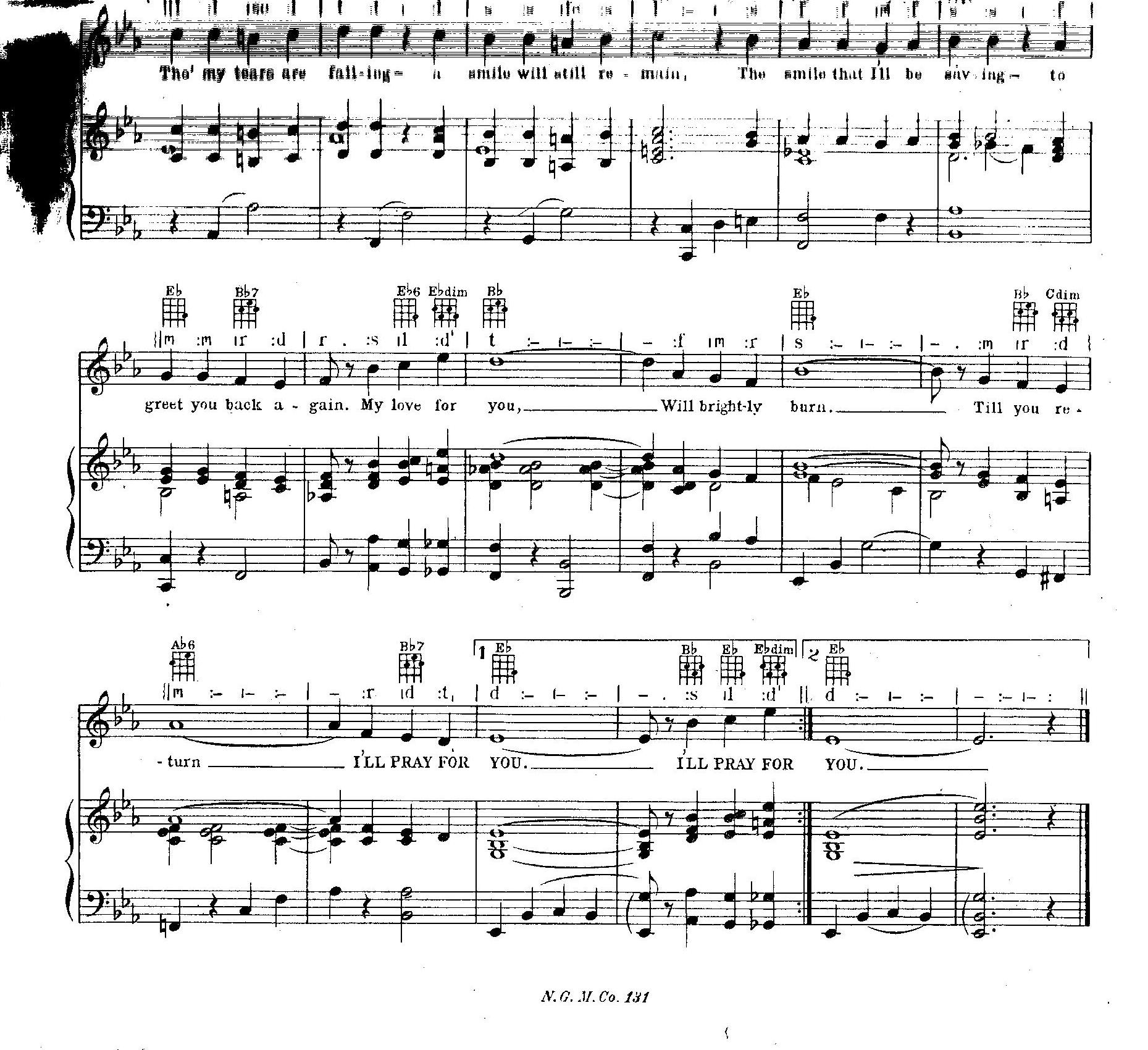 I'll Pray for You sheet music
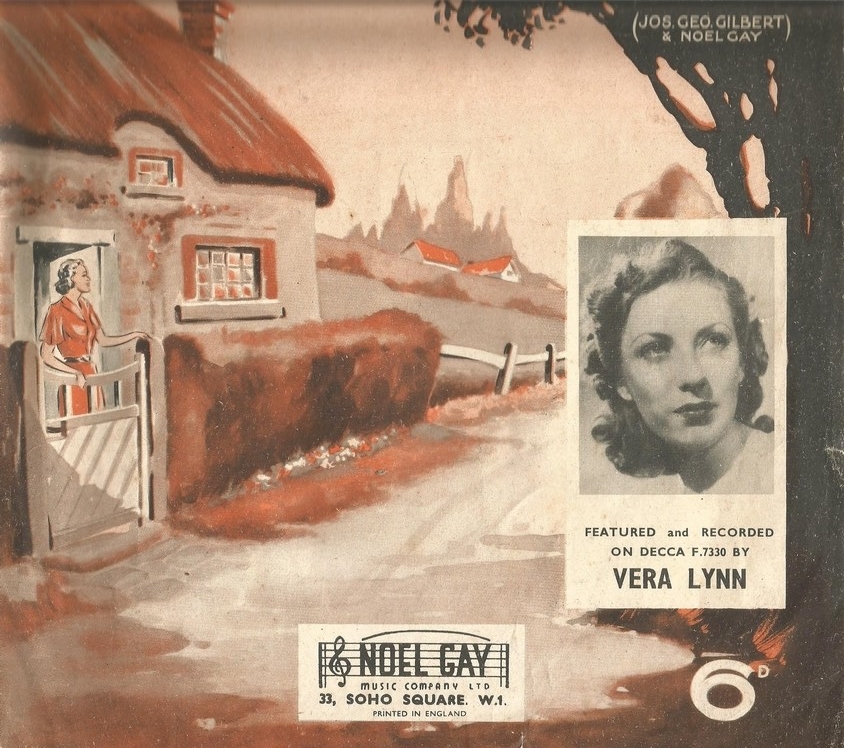 I'll Pray for You 1939
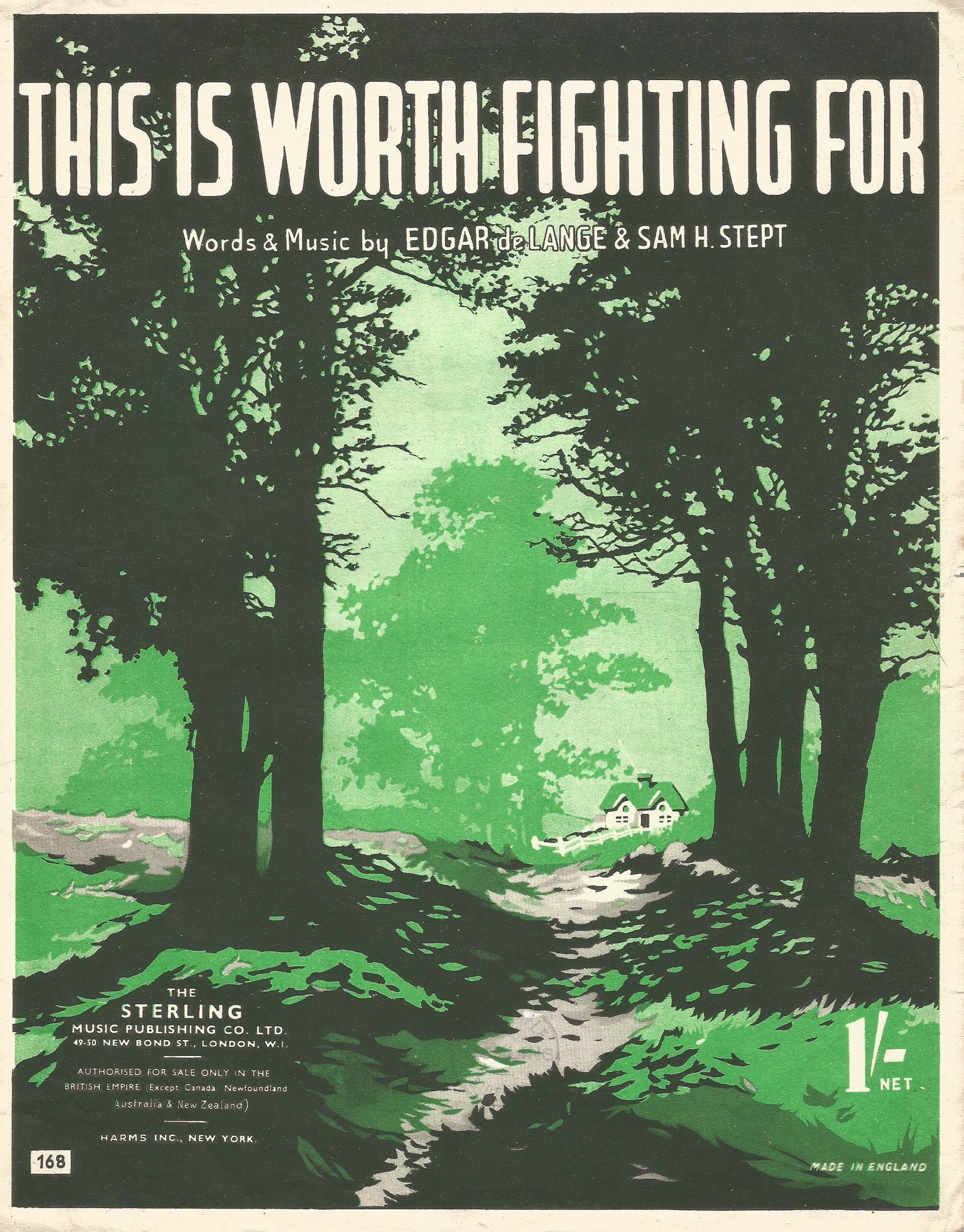 This is worth fighting 1942
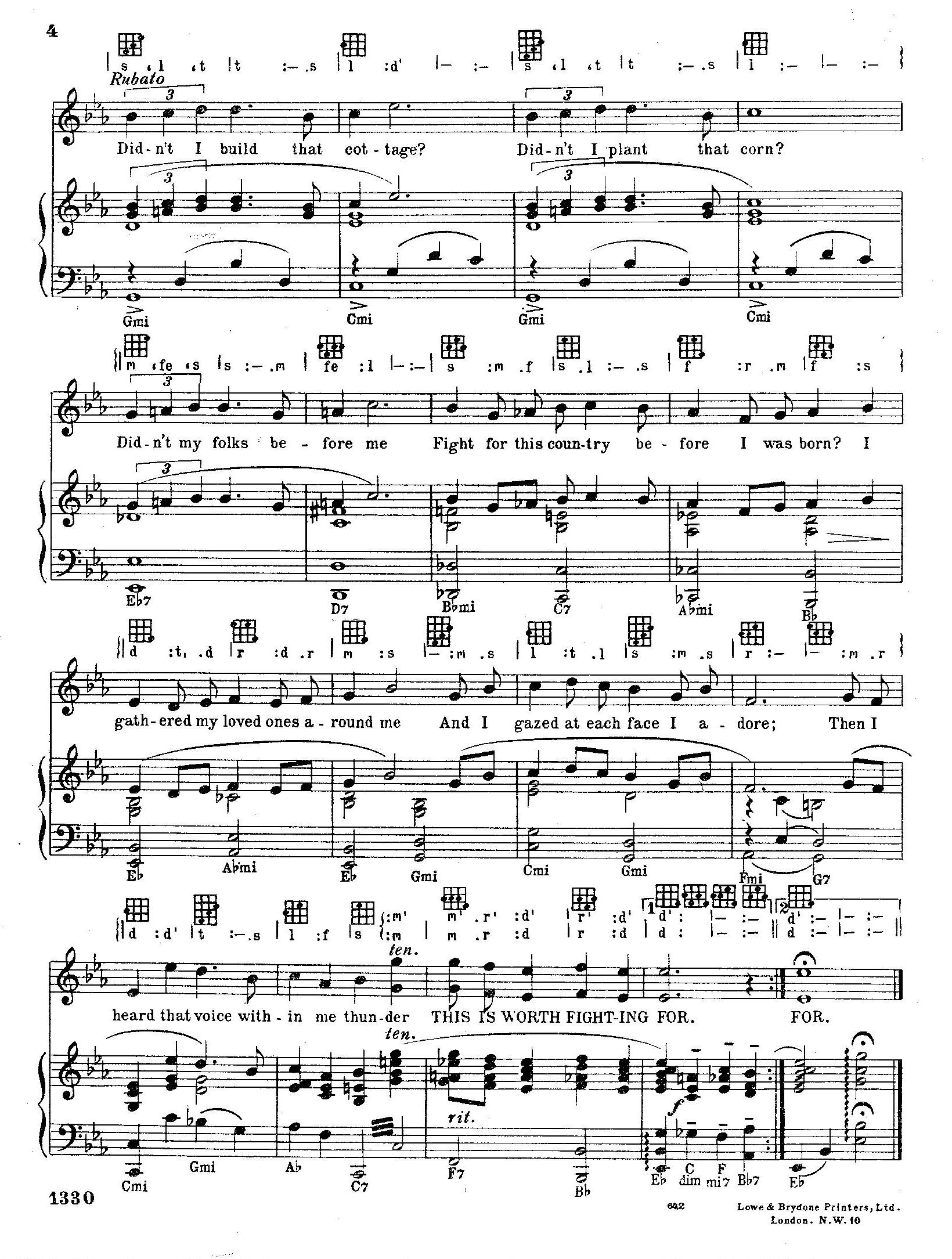 This is worth fighting for sheet music
Rex Hitchcock recounts the harbour in wartime and the changes as the Americans moved in for the build-up to the Normandy invasion.
Pauline Seaton, Jean Potter, and Kathleen Butler remember when WW2 was announced, then the bombing raids, the shelters, the raid on the school and the hospital in particular.

